This Dussehra, devotees at Ayodhya’s Ram temple will receive prasad in eco-friendly packaging.
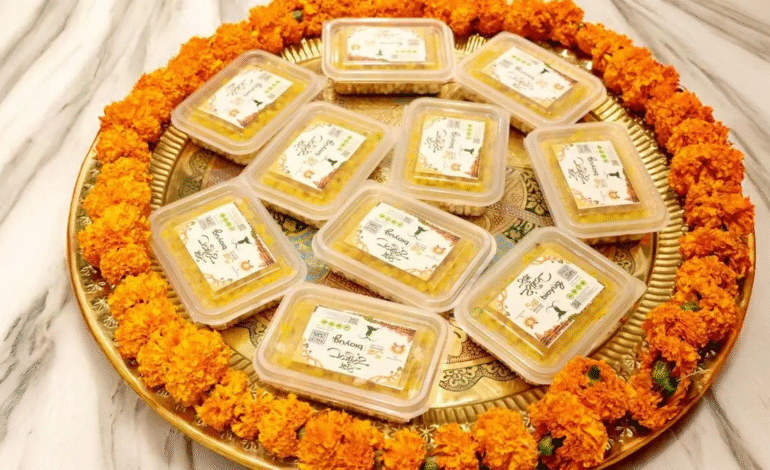

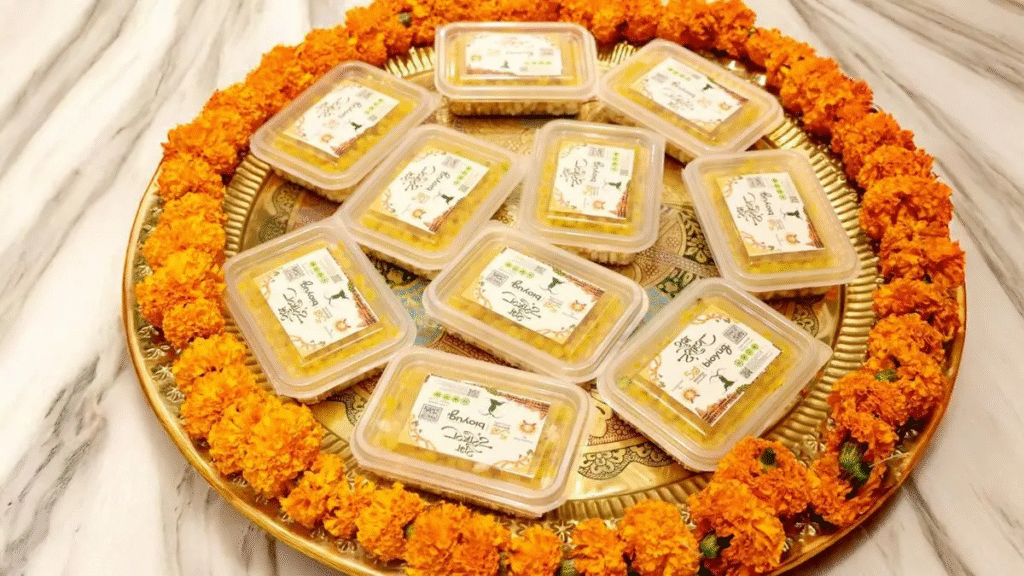
A total of 2,50,000 PLA prasad boxes and 1,00,000 water bottles have already been produced for the grand occasion.
The foundation stone for Balrampur Chini Mills’ upcoming PLA biopolymer manufacturing facility in Kumbhi, Uttar Pradesh, was laid in February this year.
In a first-of-its-kind initiative, Ayodhya’s Ram temple is adopting an eco-friendly approach for this Dussehra. Devotees visiting the iconic shrine during the festival will receive prasad in environmentally friendly boxes.
A total of 2.5 lakh PLA prasad boxes and one lakh water bottles have already been produced for the occasion.
To support this initiative, Balrampur Chini Mills, which has recently expanded into polylactic acid (PLA) manufacturing, collaborated with MSME converters and compounders from the PLA bioplastic value chain across India’s Southern and Western regions.
“This Dussehra, eco-friendly PLA prasad boxes and water bottles will be used at the historic Shree Ram Mandir in Ayodhya. Given the temple’s immense cultural and spiritual importance, this provides an ideal opportunity to blend tradition with sustainability while addressing the challenges of single-use plastic,” said Avantika Saraogi, Executive Director of Balrampur Chini Mills, in a conversation with businessline.
She added, “This also creates a meaningful experience for devotees, enabling them to interact with PLA packaging in a real-world setting that fosters familiarity, confidence, and wider acceptance of eco-conscious alternatives.” According to her, the initiative marks an important step in helping Indian consumers understand the benefits and versatility of PLA packaging.
Balrampur Chini Mills, India’s second-largest private-sector sugar company, operates ten sugar mills in Uttar Pradesh.
Commercial production
The company aims to begin commercial PLA production by the end of 2026. The foundation stone for its upcoming PLA biopolymer manufacturing facility in Kumbhi, Uttar Pradesh, was laid in February this year.
PLA (polylactic acid) is globally recognised as one of the most promising, sustainable, and food-safe substitutes for single-use plastics. Strong, visually appealing, and fully food-safe, PLA offers the utility of conventional plastic without its environmental drawbacks.
The company stated that its initiative to distribute fully bio-based prasad boxes and water bottles at the Ram temple through its PLA brand Balrampur Bioyug aligns with the Swachhata Hi Seva 2025 campaign, which promotes eco-friendly community celebrations.
Running from September 17 to October 2, this year’s campaign—titled “Swachhotsav: Celebrating Cleanliness Together”—aims to combine festive enthusiasm with a stronger commitment to environmental responsibility.
“Executing a large-scale initiative like distributing PLA prasad boxes and water bottles at Shree Ram Mandir during Dussehra requires detailed planning and coordination with multiple stakeholders. We are working closely with local authorities, the temple trust, and implementation partners to ensure logistics match the expected turnout and respect the sanctity of the occasion,” Saraogi said.
She noted that the Shri Ram Janmabhoomi Teerth Kshetra Trust has been highly cooperative, and its guidance has been key to implementing the initiative in such a spiritually significant environment.
Saraogi added that this effort not only promotes sustainable festive practices but also has the potential to motivate other organisations and institutions to embrace greener, eco-friendly alternatives.